


Westside Toastmasters is located in Los Angeles and Santa Monica, California
Chapter 10
LEG POSTURE REVEALS OUR MIND'S INTENT
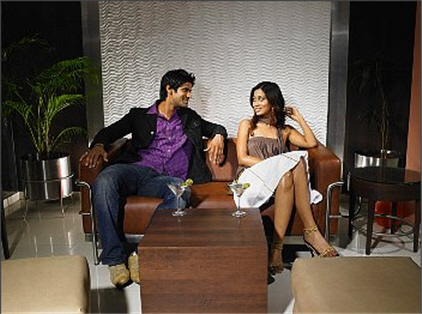
He sat there chatting her up for some time, not noticing that her legs had been crossed away from him indicating disinterest.
We have less awareness of what a particular body zone is doing physically the further away it is from our head. If we pay limited attention most of us will be aware of our facial expressions and gestures. Even those less adept can readily simulate a staged smile or frown on command to evoke an emotion for someone else though other subtle gestural clues in conflict might give you away. We remain less conscious of what our arms and hands are doing most times, and even more so with our chest and stomach. Lastly, we remain the least aware of what our legs and feet are doing at any given point in time.
This means that the legs and feet are an important source of information about someone's intrinsic attitude because most people are unaware of what they are doing with them and rarely consider faking gestures with them in the way that they would with their face. A person can look composed and in control while a restless foot is making repetitive punctuated motions, revealing an evolutionary base frustration at not being able to escape a situation.
The way people swing their arms when they walk gives insight into their personality - or what they want you to believe they're like. Young, healthy people walk faster than older people, with their arms swinging higher in front and behind due to their additional speed and greater muscle flexibility. The basic army march consequentially evolved as an exaggerated walk, suggesting that the marchers are vigorous and possessed of youthful energy and not to be messed with. Many politicians and public figures who want to telegraph a message about their vitality adopt a more vibrant gait. Women's arms tend to swing even further back because their arms bend further out from the elbow to enable them to carry babies more effectively.
Legs Can Reveal The Truth
Research by Dr. Paul Ekman and William Friesen on deceptive behaviors, shows that when a person lies he produces more signals associated with deceitfulness in the lower part of his body than in the upper part - this applies to both genders. Since people are more aware of what their hands and eyes are doing they can consciously control their actions. Although the legs and feet are also under conscious control, they are mostly ignored and often out of sight. Legs and feet are therefore a more accurate source of information.
Video recordings of people lying were shown to other people who were asked to determine if the people on the video were lying, or telling the truth. The evaluators answered more correctly when they were able to see the lower part of the body. The findings showed that liars pay more attention to what their hands, arms, and faces are doing because they know that's where people look. Since their lower extremities are out of the way, liars forget about them and are betrayed by micro-muscular movements in their legs and feet. Glass-topped tables cause us more stress than solid tables, as our legs are in full view and so we don't feel as if we are in full control.
The legs evolved in humans to serve two purposes: to move forward to get food and to run away from danger. Because the human brain is hardwired for these two objectives - to go towards what we want and move away from what we don't want - the way a person uses their legs and feet reveals where they want to go. In other words, they show a person's commitment to leaving or staying in a conversation. Open or uncrossed leg positions show an open or dominant attitude, while crossed positions reveal closed attitudes or uncertainty.
The Four Main Standing Positions
1. The Parallel Stance
The parallel stance is a subordinate position where the legs are straight and the feet are placed closely together. It's a formal position that shows a neutral attitude and is taken by schoolchildren talking to a teacher, or if you are reporting to your commanding officer, or standing in front of a judge, awaiting sentencing.
Feet placed closely together reduce the foundation for standing and make the stance more precarious. You can easily push someone over from this position if you were to catch him off guard. People who aren't sure about their position on a subject adopt the parallel stance. Standing with their legs closely placed together they're indicating that they feel hesitant or tentative. A wider stance provides a broader and firmer foundation. It is much harder to unbalance a person who's standing with his legs separated.
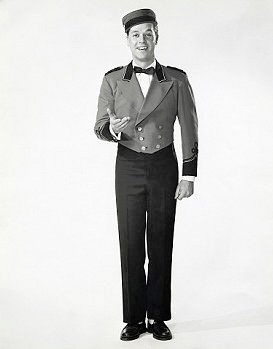
The Parallel Stance
2. Legs Apart
The legs apart stance, predominantly a male gesture, is a resolutely stable immovable posture. It tells you tells you that a person is standing his ground and is favored by those who wish to show their dominance. It requires that your legs are straight, and that your feet are placed wide apart with your weight equally distributed between them.
With their higher center of gravity, men adopt the legs apart stance more frequently than women. Their height notwithstanding, men also adopt this position more frequently in the company of other people when using their posture as a means of communication. It is used as a dominance signal by men because it highlights the genitals, giving them a virile look. Male participants at sports contests can be seen standing around with each other in this position at half time, scratching or giving their crotch an adjustment. This allows males to highlight their masculinity and show solidarity as a team by performing the same actions.
The expressions 'Having your feet on the ground' and 'Standing on your own two feet' refer to the ancient Chinese custom of binding women's feet. This custom was mostly reserved for royalty and meant that the women whose feet had been bound were unable to stand on their own two feet without causing pain.
If you're feeling defeated and want to change your mood, adopt the legs apart stance, with your head held high, and your shoulders back. By adopting this powerful position, you can create the matching feeling.
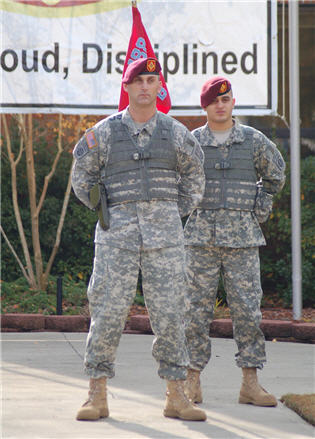
Putting their masculinity on display
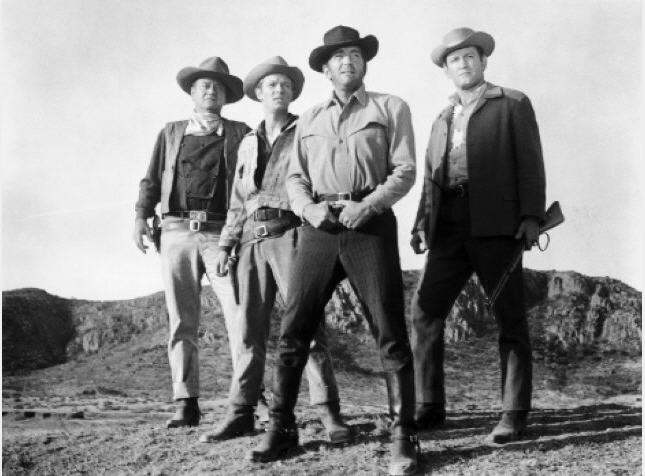
The pelvic display is used by those subconcsiously wanting to look like tough guys.
3. Posing, A Foot Forward
From the Middle Ages to the middle of the 19th century, men of elevated position and high social status adopted a stance which conveniently displayed the inner part of the leg - one of the body's erotic zones. Gentlemen and posers would bear their weight on one leg, presenting the other with the inner thigh facing. The fashion designs that saw men's dress move from hose to tight breeches accessorized with fine shoes, permitted and encouraged men to indulge their desire to preen and pose, showing off their legs and their masculinity. Today, redcarpet celebrities know how to position their legs to display them to their best advantage, turning their feet outward to reveal their inner thighs, the softer and most erogenous part of their legs.
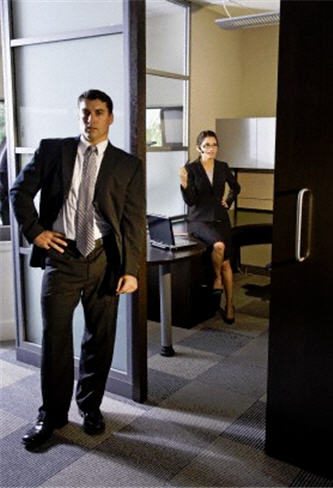
Pointing a foot at where the mind wants to go
This a valuable clue to a person's immediate intentions, because we point our lead foot in the direction our mind would like to go and this stance looks as if the person is beginning to walk. In a group situation, we point our lead foot at the most interesting or attractive person but when we want to leave, we point our feet at the nearest exit.
4. Standing Crossed Legs
The next time you attend a meeting with men and women you will notice some groups of people standing with their arms and legs crossed. Look more closely and you'll also see that they are standing at a greater distance from each other than the customary social distance.
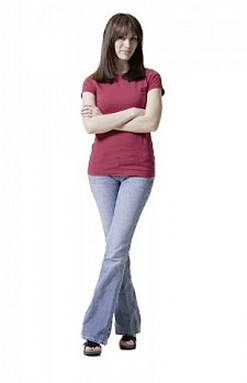
Standing crossed legs
This is how many people stand when they are among people whom they don't know well. If you interact with them you would find that one or all of them are unfamiliar with others in the group.
While open legs can show openness or dominance, crossed legs shows a more closed, submissive or defensive attitude as they symbolically deny any access to the genitals.
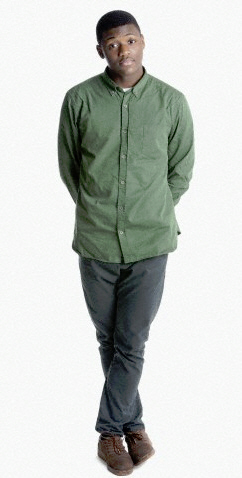
Have you got a problem?
For a woman, positions like the scissors stance and the single leg crossed stance send two messages: one, that she intends to stay, not leave; and two, that access is denied. When a man does it, it also shows he'll stay but wants to be sure you don't 'kick him where it hurts'. Open legs display masculinity; closed legs protect masculinity. If he's with men he feels are inferior to him, the genial display feels right; if he's with superior males, however, this gesture makes him look competitive and he feels vulnerable. Studies show that people who lack confidence also take leg crossed positions.
Imagine now that you notice another group of people standing with arms unfolded, palms visible, relaxed appearance and leaning back on one leg with the other pointing towards others in the group. All are gesturing with their hands and moving in and out of each other's personal space. Closer investigation would reveal that these people are friends or are known personally to each other. The first group of people with the closed arms and legs may have relaxed facial expressions and conversation that sounds free and easy, but the folded arms and legs tell us that they are not as relaxed or confident with each other as they are trying to appear.
Try this: join a group where you know no one and stand with your arms and legs tightly crossed and wear a serious expression. One by one the other group members will cross their arms and legs and remain in that position until you, the stranger, leave. Walk away and watch how, one by one, the members of the group assume their original open poses once again.
Crossing the legs not only reveals negative or defensive emotions, it makes a person appear insecure and causes others to react accordingly.
Defensive Or Cold?
Some people will claim that they are not defensive or feeling insecure when they cross their arms or legs, but do it because they're cold. When someone wants to warm his hands he'll thrust them under his armpits rather than tucking them under the elbows, as is the case with a defensive arm-cross. Second, when a person feels cold he may use a type of body hug and when the legs are crossed they are usually straight, stiff and pressed hard against each other as opposed to the more relaxed leg posture of the defensive stance or position.
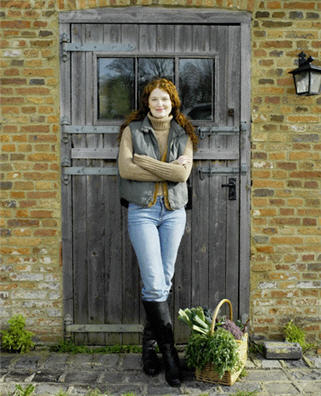
A comfortable stance or feeling a bit of a fall chill?
People who habitually cross their arms or legs prefer to say that they are cold rather than admit that they could be nervous, anxious or defensive. Others simply say they're 'comfortable'. That's probably true - when someone feels defensive or insecure, crossed arms and legs feel comfortable because it matches their emotional state.
How We Move from Closed to Open
As people begin to feel more comfortable in a group and get to know others, they move through a series of movements taking them from the defensive crossed arms and legs position to the relaxed open position. This standing 'opening-up' procedure tends to follow the same sequence everywhere.
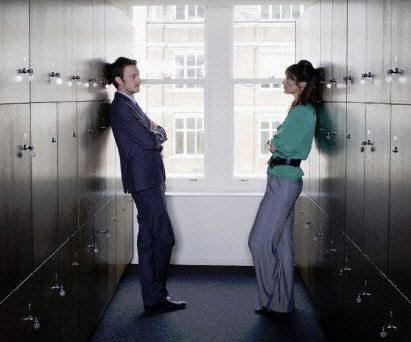
1. Crossed arms and legs indicate uncertainty about each other or the other's point of view
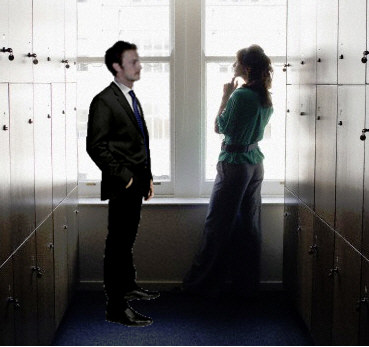
2. Increased openness and acceptance
It begins with the closed position, arms and legs crossed (image 1). As they begin to feel comfortable with each other and rapport builds, their legs uncross first and their feet are placed together in the parallel stance. Next, the arm folded on top in the arm-cross comes out and the palm is occasionally flashed when speaking but is eventually not used as a barrier. Instead, it may hold the outside of the other arm in a single arm barrier. Both arms unfold next, and one arm gestures or may be placed on the hip or in the pocket. Finally, one person takes the foot forward position, showing acceptance of the other person (image 2).
The Leg Cross
One leg is crossed neatly over the other, with 70% of people crossing left over right. This is the normal crossed leg position used by most European and Asian cultures.
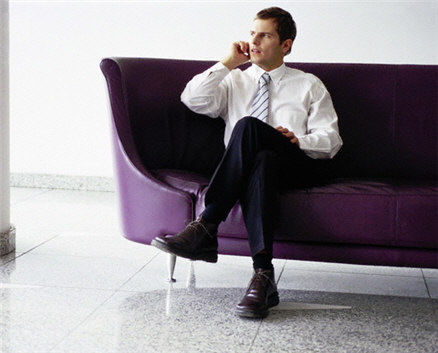
The Leg Cross
When a person crosses both legs and arms they have emotionally withdrawn from the conversation and it can be futile to try to be convincing when they sit like this.
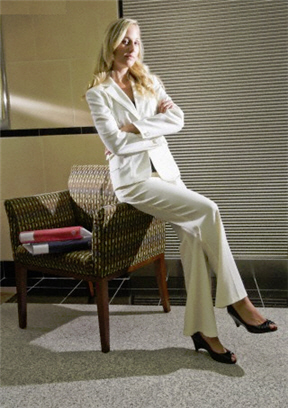
The crossed arms, legs, and a sidelong glance indicate she is not particularly receptive to open communications.
In business contexts, we have observed that people sitting like this talk in shorter sentences, reject more proposals and can recall less detail of what was discussed than those who sit with their arms and legs in an open position.
Figure Four Crossed Legs
The figure four leg position (resembling the number four as viewed from above) is used often by American men and increasingly by younger men within cultures that have been exposed to American entertainment and news media. It can reflect competitive or an argumentative attitude. This genital display arises also in the primate world, negating the damage that might be inflicted in a physical fight as male chimps or monkeys constantly reorder group hierarchy. The Nazis kept a lookout for the figure four posture during World War II, as anyone using it was clearly not German or had spent time in the US.
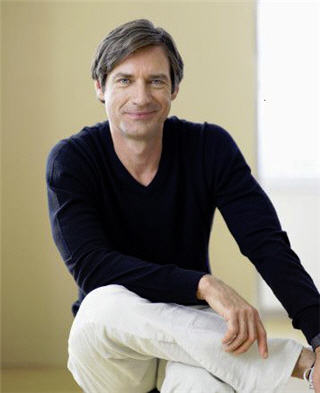
Crossed legs in the figure four position
While less common in Europe it is arising diverse cultures around the world. Men sitting in this posture are perceived as being more dominant, relaxed, and youthful. On the downside this posture is interpreted as an insult in parts of the Middle East and Asia because it shows the sole of the shoe which is culturally associated with filth.
Women wearing pants of any sort progressively can also be seen sitting in the figure four position. They tend to do it only around other women though, not men, as they don't want to appear too masculine.
The Leg Clamp
Not only does this person have a competitive attitude, they lock the figure four crossed leg into a permanent position using one or both hands as a clamp. This may be a sign of the tough-minded, stubborn individual who rejects any opinion other than their own.
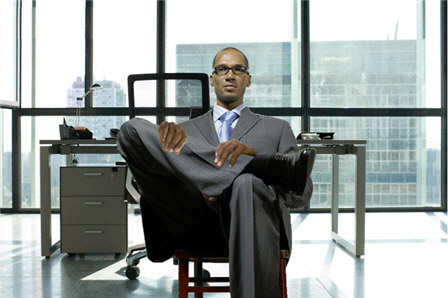
Locking a competitive attitude into place
Locked Ankles
Studies of body language by Gerard Nierenberg and Henry Calero, in which they paid particular attention to the participant's ankles, has shown a high rate of individuals locking their ankles when holding back information.
In-flight airline personnel are trained to spot passengers who would like service and who are too shy to ask for it. Apprehensive travellers sit with their ankles locked, especially during take-off. When being offered refreshments from the cabin staff, these same individuals tend to unlock their ankles and move toward the edge of their seats. If, however, the ankles remain in the locked position, the crew are alerted to the fact that the person may really want something, even though he or she may be saying 'No'. The crew member responds by asking if the passenger is sure that he doesn't want something. Asking the passenger in this manner has an opening-up effect on that person.
Further studies into patients in a dental surgery showed that, of 150 male patients observed, 128 immediately locked their ankles when they sat in the dentist's chair. These men tended to grip the chair's armrests or clench their hands together around their groin area. Of the 150 women analyzed, only 90 initially sat with their ankles crossed. Women, too, clench their hands, but they tend to rest them on their midsection.
If a person sits in the waiting room with his ankles uncrossed he's probably there for a routine dental check-up that he knows won't take too long and won't be particularly painful. If, due to extensive dental work, the patient has to make a number of visits to the dentist, that person becomes more comfortable in the dentist's chair after four or five visits, and doesn't lock his ankles.
Research with law enforcement and government bodies revealed that most people being interviewed knot their ankles at the start of the interview. The reason for this is as likely to be based on fear as on guilt.
Defendants sitting outside a courtroom waiting for their hearing are three times more likely than the plaintiffs to have their ankles tightly crossed and tucked under their chairs in an attempt to control their emotions.
Nierenberg's and Calero's research into the human resources profession revealed that most interviewees lock their ankles at some point during an interview, indicating that the person being interviewed is holding back an emotion or attitude. Using appropriate questioning techniques during a negotiation, in which one party locks his ankles, the questioner can get the other to open up and reveal valuable information.
Finally, Nierenberg's and Calero's research showed that patients who were being wheeled into an operating room with their ankles crossed and their hands clenched, tend not to have reconciled themselves to the unavoidable.
In the women's variant of locking ankles the knees are held together, the feet may be to one side and the hands rest side by side or one on top of the other resting on the upper legs. This is partly a product of physiology and also of the practical matter in what women may wear. The male version of locking ankles can reflect anxiety or a certain amount of relaxation. As a demonstration of anxiety it is often combined with clenched fists resting on the knees or with the hands tightly gripping the arms of the chair and a seated pelvic display.
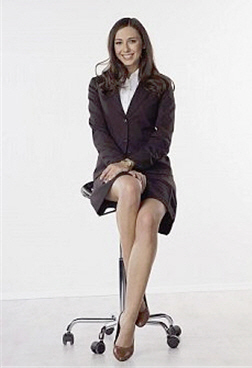

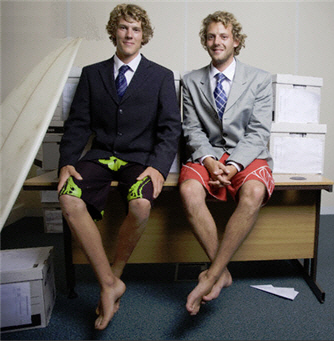
A woman minimizing her leg space and men taking up more space
Short Skirts
Women wearing mini-skirts cross their legs and ankles for obvious reasons. Many older women by habit will still sit in this position even though they no longer wear short skirts. This can subconsciously make them feel and act restrained. Others may read this as a reserved attitude and react accordingly.
A trap is that restrained or defensive gestures can feed back into and reinforce a reserved or negative attitude. Practice using positive and open gestures. This will improve your self-confidence and others will perceive you in a more positive way and more fully engage you.
Entwining Your Legs
Some gestures are particular to men and others are particular to women. The leg twine in which the top of one foot locks itself around the other leg is used almost exclusively by women. This position highlights insecurity, despite how relaxed a woman's upper body may appear. If you want to unwind a woman from the entwined leg position take a friendly and low-key approach to encourage her to open up.
Jessica was asked by her university history professor to stand in front of the lecture hall and discuss the latest assignment. Being uncertain of what was expected of her, she stood in front of the class of 120 students, with one foot drawn up behind her supporting leg and pressed against her calf. Although she was confident about her knowledge of the material, she felt shy and timid speaking in front of such a large group of people, many of whom she didn't know. When she realized how she was standing, she placed both feet firmly under her and found that she felt more confident and secure, and was able to speak with authority and assurance.
Studies show that people meeting in a group for the first time usually stand with their arms and legs in the crossed position. As rapport develops and they become more comfortable with one another they release the closed pose, and open up their bodies. The procedure follows a predictable pattern that entails uncrossing their legs first and placing their feet in the parallel pose. The arms and hands unfold, and become animated. When the people feel comfortable and at ease they move from the parallel stance to an open position in which the feet are slightly apart and facing the other person. Conversely, indicators of someone who is withdrawing from the conversation are the crossing of arms and legs. A person sitting in this position is unlikely to be convinced by anything you may say or do.
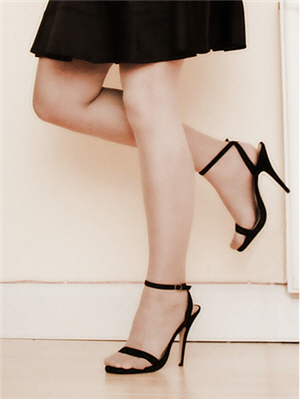
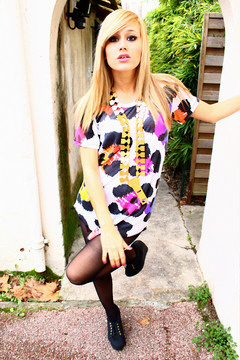
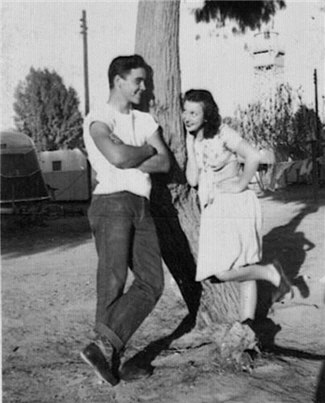
Shy women often entwine their legs while standing
Seated Parallel Legs
Women's legs and hips have bone structure enabling them to sit in this manner, projecting strong feminine signals. This sitting position cannot be comfortably replicated by most men. The great majority of men rate this sitting position for women as their absolute favorite when questioned in surveys.
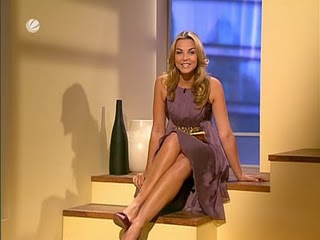
Men highly favor this seating position with women
One leg presses against the other and gives the legs a healthier, more youthful look, which instinctively appeals to men from a reproductive standpoint. Modelling classes commonly teach this posture to women. Do not confuse this in the woman who constantly crosses and uncrosses her legs when she's with a man she desires; in that case the leg shifts are a means of drawing attention to her legs.
The High Heels Effect
Most women instinctively know the effect the wearing of high heels have on men ... and are willing to suffer the downsides of wearing 5 inch heels. The reason men find women more attractive in high heels has its basis in biology.
High heels make the legs look more toned, giving the illusion of better health and more fertility. Men don't realize it, and women may rarely think about it, but the human male is attracted to females who show signs of increased fertility. High heels also accentuate the arch in the lower back, they contract the gluteus muscles which emphasize the derrière, they tilt the pelvis forward, and lengthen the legs. All these characteristics are consistent with increase fertility - thus increased attractiveness.
High heels also make a woman's feet appear smaller, which while not a biological driver of attractiveness, is common to many cultures.
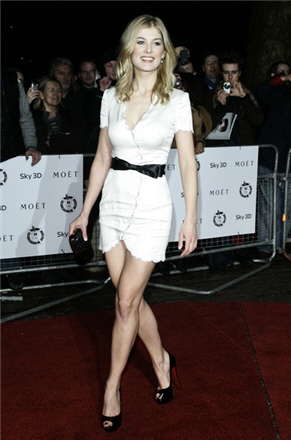
Strutting her stuff
Putting Your Foot Forward
When we're interested in either a conversation or a person, we put one foot forward to shorten the distance between us and that person. If we are reticent or not interested, we put our feet back, usually under a chair if seated.
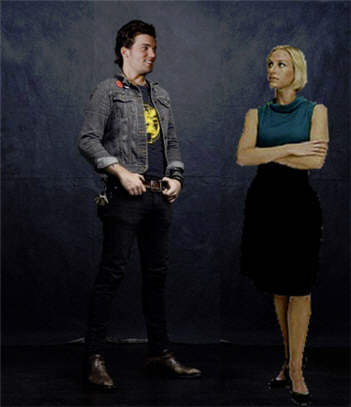
He's coming on strong; she is undecided
Say that a man is speaking to a woman he finds particularly attractive as in the image above. Using typical male courtship body language he's likely to stand with one foot pointing toward her with his legs apart exposing his groin area, and holding his arms in a splayed position to make himself look larger and fill more space. This tactic of trying to appear larger in perceived size is found in many forms throughout the animal kingdom by males courting females.
If the woman doesn't find him attractive and wants to give him the brush-off, she holds her legs together, faces her body away from him, folds her arms, and makes herself appear as small as possible. No one says a word, yet the visual messages tell the story. He's probably wasting his time.
Fidgeting Feet
Fidgeting feet are a good indicator of someone's impatience threshold. The feet say they want to flee and so are forced to fidget until the time comes to walk or run. If you're standing, you may repeatedly tap your foot to indicate your impatience. If you're sitting with your legs crossed, you may twitch the hanging foot up and down, or back and forth.
To appear calm on the outside when everything inside's in a panic, breathe from your abdomen, adjust your stance, and let your feet take root.
Summary
Our feet tell others where we want to go and who we do or don't like. Women should avoid crossing their legs in business meetings unless wearing a dress or business suit that has a skirt with a hem line below the knee. The creatures that men are, they are easily distracted by the sight of a woman's thighs which can detract from both a woman's intended message and her general business image. They will remember who she was but less of what she was attempting to communicate. Visual media regularly presents female hosts in programming wearing shorter dresses and skirts exposing a good deal of leg real estate. Many women will imitate this in the business world. Studies demonstrate that male viewers will watch video programming longer the more legs are exposed. Those same studies undeniably further show these men remembering less of what women said. The rule here is simple - for social contexts, exposed crossed legs are fine but avoid it in business.
Westside Toastmasters on Meetup