


Westside Toastmasters is located in West Los Angeles and Santa Monica, California
Chapter 12
BODY MIRRORING: HOW WE ENHANCE PERSONAL CONNECTIONS
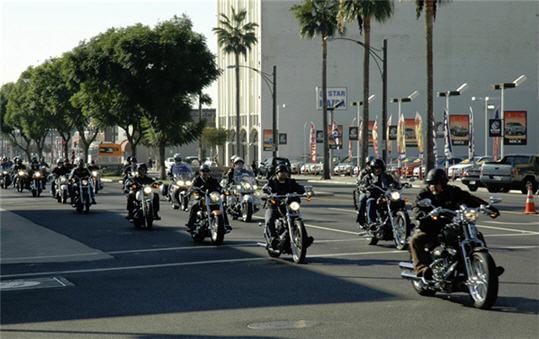
They all look the same, dress the same way, use the same facial expressions and body language but each will tell you he's "doing his own thing"
When we meet others for the first time, we need to assess quickly whether they are positive or negative towards us, just as most other animals do for survival reasons. We do this by scanning the other person's body to see if they will move or gesture the same way we do in what is known as 'mirroring'. We mirror each other's body language as a way of bonding, being accepted and creating rapport, but we are usually oblivious to the fact that we are doing it. In ancient times, mirroring was also a social device which helped our ancestors fit in successfully with larger groups; it is also a left-over from a primitive method of learning which involved imitation.
One of the most noticeable forms of mirroring is yawning - one person starts and it sets everyone off. Dr. Robert Provine found that yawning is so contagious you don't even need to see another person yawn - the sight of a wide-open mouth is enough to do it. It was once thought that the purpose of yawning was to oxygenate the body but we now know that it's a form of mirroring that serves to create rapport with others and to avoid aggression - just as it also does for monkeys and chimps.
Wearing the same outfit as another woman is a mirroring no-no. But if two men show up at a party wearing the same outfit, they could become lifelong friends.
Non-verbally, mirroring says 'Look at me; I'm the same as you. I feel the same way and share the same attitudes.' This is why people at a rock concert will all jump to their feet and applaud simultaneously or give a 'Mexican Wave' together. The synchronicity of the crowd promotes a secure feeling in the participants. Similarly, people in an angry mob will mirror aggressive attitudes and this explains why many usually calm people can lose their cool in this situation.
The urge to mirror is also the basis on which a queue works. In a queue, people willingly co-operate with people they have never met and will never see again, obeying an unwritten set of behavioral rules while waiting for a bus, at an art gallery, in a bank or side by side in war. Professor Joseph Heinrich from the University of Michigan found that the urges to mirror others are hardwired into the brain because co-operation leads to more food, better health and economic growth for communities. It also offers an explanation as to why societies that are highly disciplined in mirroring, such as the British, Germans and ancient Romans successfully dominated the world for many years.
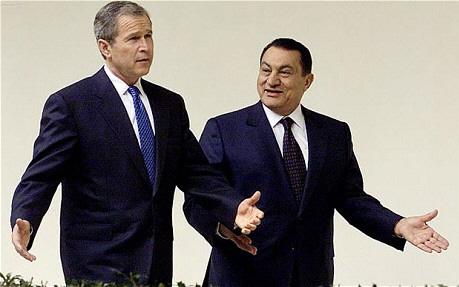
Mirroring the other person's body language and appearance shows a united front and doesn't let either get one-up on the other
Mirroring makes others feel 'at ease'. It's such a powerful rapport-building tool that slow-motion video research reveals that it even extends to simultaneous blinking, nostril-flaring, eyebrow-raising and even pupil dilation, which is remarkable as these micro-gestures cannot be consciously imitated.
Creating the Right Vibes
Studies into synchronous body language behavior show that people who feel similar emotions, or are on the same wavelength and are likely to be experiencing a rapport, will also begin to match each other's body language and expressions. Being 'in sync' to bond with another person begins early in the womb when our body functions and heartbeat match the rhythm of our mother, so mirroring is a state to which we are naturally inclined.
When a couple are in the early stages of courtship it's common to see them behave with synchronous movements, almost as if they are dancing. For example, when a woman takes a mouthful of food the man wipes the corner of his mouth; or he begins a sentence and she finishes it for him. When she gets PMT, he develops a strong desire for chocolate; and when she feels bloated, he farts.
When a person says 'the vibes are right' or that they 'feel right' around another person, they are unknowingly referring to mirroring and synchronous behavior. For example, at a restaurant, one person can be reluctant to eat or drink alone for fear of being out of sync with the others. When it comes to ordering the meal, each may check with the others before ordering. 'What are you having?' they ask as they try to mirror their meals. This is one of the reasons why playing background music during a date is so effective - the music gets a couple to beat and tap in time together.
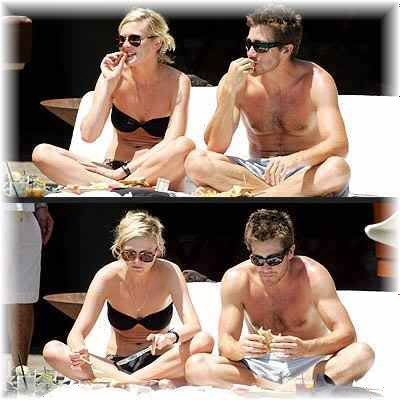
This couple on a picnic are acutely tuned into the flow of one another as evidenced by their body language mimicry.
Mirroring on a Cellular Level
American heart surgeon, Dr Memhet Oz, reported some remarkable findings from heart recipients. He found that, as with most other body organs, the heart appears to retain cellular memories, and this allows some patients to experience some of the emotions experienced by the heart donor. Even more remarkably, he found some recipients also assume the same gestures and posture of the donor even though they have never seen the donor. His conclusion was that it appears that the heart cells instruct the recipient's brains to take on the donor's body language. Conversely, people suffering from disorders such as autism have no ability to mirror or match the behavior of others, which makes it difficult for two-way communication with others. The same goes for drunk people whose gestures are out of sync with their words, making it impossible for any mirroring to occur.
Because of the phenomenon of cause and effect, if you intentionally assume certain body language positions you will begin to experience the emotions associated with those gestures. For example, if you feel confident, you may unconsciously assume the Steeple gesture to reflect your confidence, but if you intentionally Steeple you will not only begin to feel more confident, others will perceive that you're confident. This, then, becomes a powerful way to create a rapport with others by intentionally matching their body language and posture.
Mirroring Differences Between Men and Women
Geoffrey Beattie, at the University of Manchester, found that a woman is instinctively four times more likely to mirror another woman than a man is to mirror another man. He also found that women mirror men's body language too, but men are reluctant to mirror a woman's gestures or posture - unless he is in courtship mode.
When a woman says she can 'see' that someone doesn't agree with the group opinion she is actually 'seeing' the disagreement. She's picked up that someone's body language is out of sync with group opinion and they are showing their disagreement by not mirroring the group's body language. How women can 'see' disagreement, anger, lying or feeling hurt has always been a source of amazement to most men. It's because most men's brains are simply not well equipped to read the fine detail of others' body language and don't consciously notice mirroring discrepancies.
Men and women's brains are programmed differently to express emotions through facial expressions and body language. Typically, a woman can use an average of six main facial expressions in a ten-second listening period to reflect and then feed back the speaker's emotions. Her face will mirror the emotions being expressed by the speaker. To someone watching, it can look as if the events being discussed are happening to both women.
A woman reads the meaning of what is being said through the speaker's voice tone and his emotional condition through his body language. This is exactly what a man needs to do to capture a woman's attention and to keep her interested and listening. Most men are daunted by the prospect of using facial feedback while listening, but it pays big dividends for the man who becomes good at it.
Some men say 'She'll think I'm effeminate!', but research with these techniques shows that when a man mirrors a woman's facial expressions as she talks she will describe him as caring, intelligent, interesting and attractive.
Men, on the other hand, can make fewer than a third of the facial expressions a woman can make. Men usually hold expressionless faces, especially in public, because of the evolutionary need to withhold emotion to stave off possible attack from strangers and to appear to be in control of their emotions. This is why most men look as if they are statues when they listen.
The emotionless mask that men wear while listening allows them to feel in control of the situation, but does not mean men don't experience emotions. Brain scans reveal that men can feel emotion as strongly as women, but avoid showing it publicly.
What to Do About It if You're Female
The key to mirroring a man's behavior is in understanding that he doesn't use his face to signal his attitudes - he uses his body. Most women find it difficult to mirror an expressionless man but with males this is not required. If you're a woman, it means that you need to reduce your facial expressions so that you don't come across as overwhelming or intimidating. Most importantly, don't mirror what you think he might be feeling. That can be disastrous if you've got it wrong and you may be described as 'dizzy' or 'scatterbrained'. Women in business who listen with a more serious face are described by men as more intelligent, astute and sensible.
When Men and Women Start to Look Alike
When two people live together for a long time and have a good working relationship, they often begin to look alike. This is because they are constantly mirroring each other's facial expressions, which, over time, builds muscle definition in the same areas of the face. Even couples who don't look facially similar can appear similar in a photograph because they use the same smile.

If actor Mario Lopez and wife Courtney Mazza stay married for a number of years will they further change to resemble each other even more as many couples do? ...
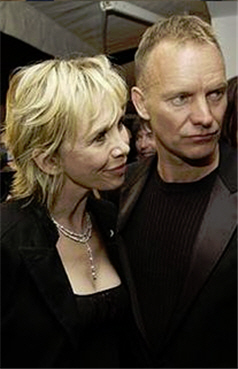
Musician / performer Sting and his wife Trudie Styler seeming to have developed a facial resemblance to one another over the course of time
In 2000, psychologist Dr John Gottman of the University of Washington, Seattle, and his colleagues, discovered that marriages are more likely to fail when one partner not only does not mirror the other's expressions of happiness, but instead shows expressions of contempt. Instead, this opposite behavior affects the smiling partner, even when they are not consciously aware of what is happening.
Do We Resemble Our Pets?
You can also see mirroring occur in the pets some people choose. Without realizing it, we unconsciously tend to favor pets that physically resemble us, or that appear to reflect our attitudes. To demonstrate the point, here are a couple of examples:

Do we choose pets that resemble us?

Be careful however not to extrapolate the metaphor too far and presume that our model of body language and social interpretation applies to a dog's body language.
Be careful however not to extrapolate the metaphor too far and presume that our model of body language and social interpretation applies to a dog's body language.
Monkey See, Monkey Do
The next time you attend a social function or go to a place where people meet and interact, notice the number of people who have taken the identical gestures and posture of the person with whom they're talking. Mirroring is the way one person tells another that he is in agreement with his ideas and attitudes. One is non-verbally saying to the other, 'As you can see, I think the same as you.' The person with the highest status often makes the first moves and the others copy, usually in pecking order.
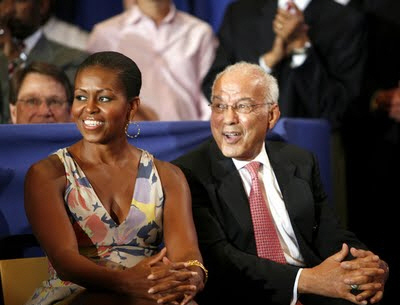
Thinking alike
In the image above it is apparent by virtue of the facial expressions and other body language that there is a good rapport between the US President's wife Michelle Obama, of informally superior status, and a university president. If Michelle changes her body posture, one might expect there is a reasonably good chance the gentleman will unconsciously emulate her posture, indirectly demonstrating they are of the same mind.
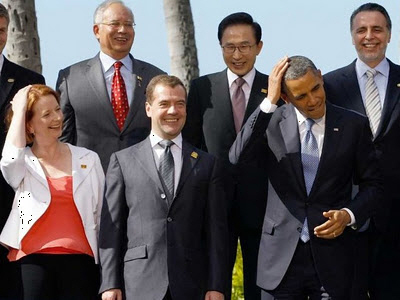
Former Australian Prime Minister Julia Gillard demonstrates her mutual respect of Barack Obama through playful mirroring.
Mirroring happens among friends or between people of the same status and it is common to see married couples walk, stand, sit and move in identical ways. Albert Scheflen found that people who are strangers studiously avoid holding mirror positions.
Matching Voices
Intonation, voice inflection, speed of speaking and even accents also synchronize during the mirroring process to further establish mutual attitudes and build rapport. This is known as 'pacing' and it can almost seem as if the two people are singing in tune. You will often see a speaker beating time with his hands while the listener matches the rhythm with head nods. As a relationship grows over time, the mirroring of the main body language positions becomes less as each person begins to anticipate the other's attitudes, and vocal pacing with the other person becomes a main medium for maintaining rapport.
Never speak at a faster rate than the other person. Studies reveal that others describe feeling 'pressured' when someone speaks more quickly than they do. A person's speed of speech shows the rate at which their brain can consciously analyze information. Speak at the same rate or slightly slower than the other person and mirror their inflection and intonation. Pacing is critical when attempting to make appointments by telephone because voice is your only communication medium.
Intentionally Creating Rapport
The significance of mirroring is one of the most important body language lessons you can learn because it's a clear way in which others tell us that they agree with us or like us. It is also a way for us to tell others that we like them, by simply mirroring their body language.
If a boss wants to develop a rapport and create a relaxed atmosphere with a nervous employee, he could copy the employee's posture to achieve this end. Similarly, an up-and-coming employee may be seen copying his boss's gestures in an attempt to show agreement when the boss is giving his opinion. Using this knowledge, it is possible to influence others by mirroring their positive gestures and posture. This has the effect of putting the other person in a receptive and relaxed frame of mind, because he can 'see' that you understand his point of view.
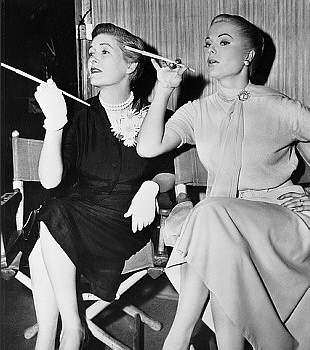
Mirroring the other person's body language to gain acceptance
Before you mirror someone's body language, however, you must take into consideration your relationship with that person. Let's say, for example, a corporate employee has asked for a pay rise and is called into his manager's office. The employee enters the office, the manager asks him to sit down and assumes the Catapult with a Figure-Four showing the employee a superior, dominant attitude. But what would happen if the subordinate then instinctively copied the manager's dominant body language while discussing the potential salary increase?
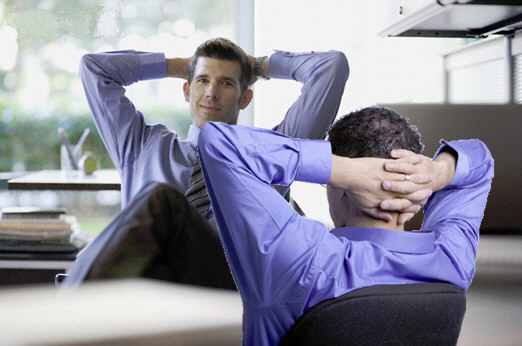
A boss might perceive a subordinate's mirroring behavior as being pushy or impertinent
Even if the employee's manner of speaking and phrasing was typical of a subordinate, the manager could feel affronted by the employee's body language, placing the employee's pay increase request in doubt and perhaps posing a threat to his future promotability. Mirroring is also effective for intimidating or disarming people who deem themselves 'superior' and try to take control of situations. Accountants, lawyers and managers are notorious for using superiority body language clusters around people they consider inferior. By mirroring, you can disconcert them and force a change of position. But never do it to the boss.
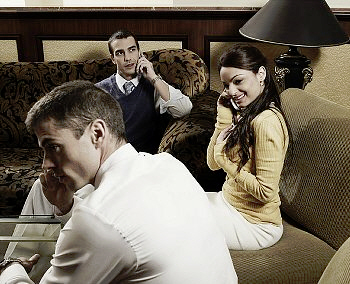
They have the same posture and the body language shows they are friends going about business in the same way with similar goals.
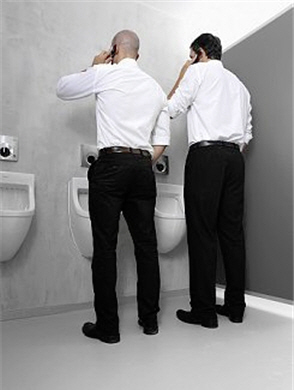
Through mirrored multi-tasking, these business associates are taking their minds off what can seem an awkward encroachment on their personal zones.
Who Mirrors Whom?
Research shows that when the leader of a group assumes certain gestures and positions, subordinates will copy, usually in pecking order. Leaders also tend to be the first of a group to walk through a doorway and they like to sit on the end of a sofa, table or bench seat rather than in the center. When a group of executives walks into a room, the person with the highest status usually goes first. When executives are seated in the boardroom, the boss usually sits at the head of the table, often furthest from the door. If the boss sits in the Catapult, his subordinates are likely to copy in order of their importance within the group You can see this in a meeting where people 'take sides' with others by mirroring their body language. This lets you see who will vote with you and who will vote against you.
Mirroring is a good strategy to use if you are part of a presentation team. Decide, in advance, that when the team spokesperson makes a gesture or takes a posture when speaking, the entire team will mirror. This not only gives your team the powerful appearance of being cohesive, it can frighten the hell out of competitors who suspect something is up, even though they can't quite figure out what it is.
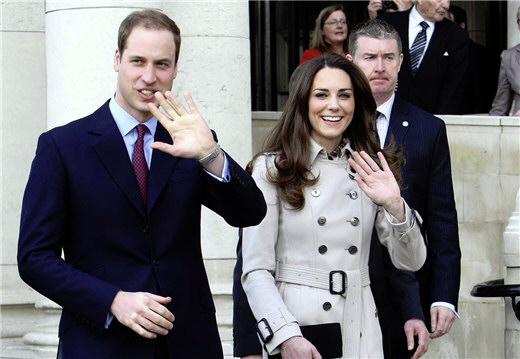
Prince William and Kate Middleton demonstrate they are emotionally and behaviorally synchronized
When presenting ideas, products and services to couples, watching who mirrors whom reveals where the ultimate power or final decision-making ability lies. If the woman makes the initial movements, however small, such as crossing her feet, lacing her fingers or using a Critical Evaluation cluster and the man copies, there is little point in asking him for a decision - he doesn't have the authority to make it.
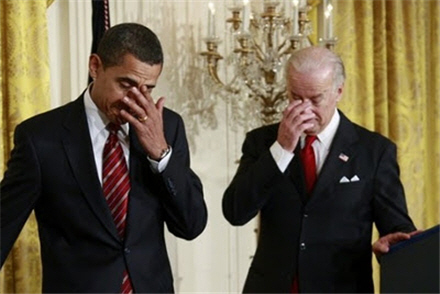
When we rub both of our eyes simultaneously, it is as if we are telling our psyches, "I wish I never saw that", or "I can't believe he did that". We are trying to wipe it from our minds. People will also display this body language tell when recalling a past event in the "mind's eye".
Group Mirroring
It happens on fall season Sundays in American football stadiums around the country. Suddenly, 50,000 individuals became a single unit, almost a single mind, focused intently on what was happening on the field - that particular touchdown grab or dive into the end zone. Somehow, virtually simultaneously, each of those 50,000 people tuned into what the other 49,999 were looking at.
Becoming part of a crowd can be exhilarating or terrifying: The same mechanisms that make people fans can just as easily make them fanatics. And throughout human history we have constructed institutions that provide that dangerous, enthralling thrill. The Coliseum-like stadiums that host American football games or soccer games throughout the world are, after all, just modern knockoffs of the massive theater that housed Roman crowds cheering their favorite gladiators 2,000 years ago.
In fact, recent studies suggest that our sensitivity to crowds is built into our perceptual system and operates in a remarkably swift and automatic way. In a 2012 paper in the Proceedings of the National Academy of Sciences, A.C. Gallup, then at Princeton University, and colleagues looked at the crowds that gather in shopping centers and train stations.
In one study, a few ringers simply joined the crowd and stared up at a spot in the sky for 60 seconds. Then the researchers recorded and analyzed the movements of the people around them. The scientists found that within seconds hundreds of people coordinated their attention in a highly systematic way. People consistently stopped to look toward exactly the same spot as the ringers.
The number of ringers ranged from one to 15. People turn out to be very sensitive to how many other people are looking at something, as well as to where they look. Individuals were much more likely to follow the gaze of several people than just a few, so there was a cascade of looking as more people joined in.
In a study in Psychological Science, Timothy Sweeny at the University of Denver and David Whitney at the University of California, Berkeley, looked at the mechanisms that let us follow a crowd in this way. They showed people a set of four faces, each looking in a slightly different direction. Then the researchers asked people to indicate where the whole group was looking (the observers had to swivel the eyes on a face on a computer screen to match the direction of the group).

We follow a crowd via perceptual mechanisms that are quick almost beyond belief.
Because we combine head and eye direction in calculating a gaze, the participants couldn't tell where each face was looking by tracking either the eyes or the head alone; they had to combine the two. The subjects saw the faces for less than a quarter of a second. That's much too short a time to look at each face individually, one by one.
It sounds impossibly hard. If you try the experiment, you can barely be sure of what you saw at all. But in fact, people were amazingly accurate. Somehow, in that split-second, they put all the faces together and worked out the average direction where the whole group was looking.
In other studies, Dr. Whitney has shown that people can swiftly calculate how happy or sad a crowd is in much the same way.
Other social animals have dedicated brain mechanisms for coordinating their action - that's what's behind the graceful rhythms of a flock of birds or a school of fish.
Summary
Mirroring someone's body language makes them feel accepted and creates a bond and is a phenomenon that occurs naturally between friends and people of equal status. Conversely, we make a point of not mirroring those we don't like or strangers, such as those riding with us in a lift or standing in the queue at the cinema.
Mirroring the other person's body language and speech patterns is one of the most powerful ways to build rapport quickly. In a new meeting with someone, mirror his seating position, posture, body angle, gestures, expressions and tone of voice. Before long, they'll start to feel that there's something about you they like - they'll describe you as 'easy to be with'. This is because they see themselves reflected in you. A word of warning, however: don't do it too early in a new encounter as many people have become aware of mirroring strategies. When someone takes a position you have one of three choices - ignore it, do something else or mirror it. Mirroring pays big dividends. But never mirror a person's negative signals.